

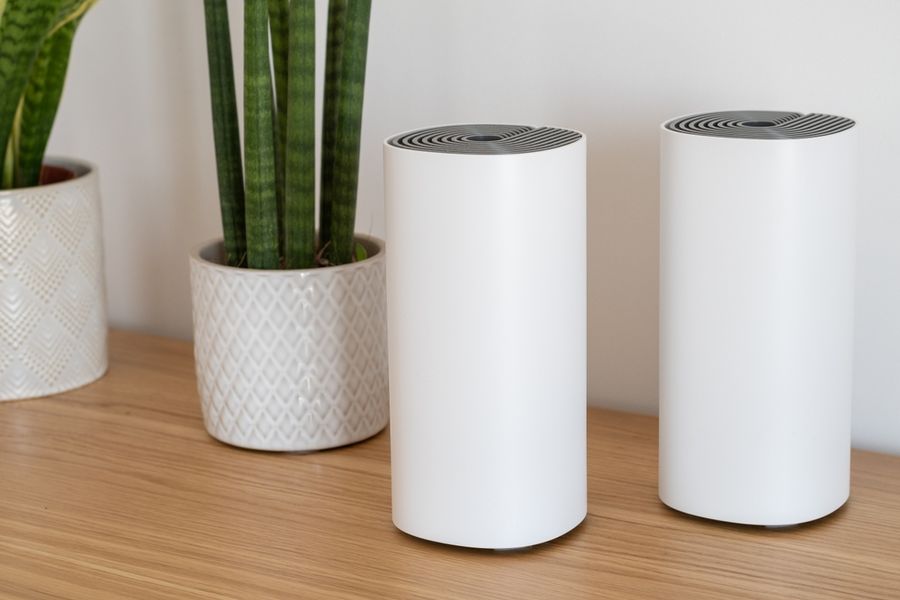
Slow or unreliable Wi-Fi can make working, streaming, or relaxing at home unnecessarily frustrating. Many households struggle with dead zones caused by thick walls, long floor plans, or widely spaced rooms. A home mesh Wi-Fi system offers a practical solution by spreading strong, consistent wireless coverage throughout the entire house. Instead of relying on a single router, mesh systems use multiple connected units to deliver smoother, more dependable internet access in every corner of your home.
What Makes Mesh Wi-Fi Different From a Traditional Router
A traditional router sends out a Wi-Fi signal from one central point. The farther you move from the router, the weaker the signal becomes. If your home is large, multi-level, or built with materials that block wireless signals, your connection may drop or slow down. Range extenders can help, but they often create separate networks that require manual switching as you move around.
Mesh Wi-Fi systems solve these issues by using several devices—called nodes—that work together as one unified network. Each node communicates with the others, passing your device’s connection seamlessly from one point to the next. This creates a blanket of coverage that feels much more consistent. As long as you remain within the network’s reach, your device stays connected automatically without interruptions or manual adjustments.
Because nodes share the workload, they maintain stronger speeds than many extenders. This distributed design makes mesh systems especially effective for busy households where multiple devices are online at the same time.
How Mesh Systems Deliver Stronger Coverage
Mesh Wi-Fi relies on a communication method known as “dynamic routing,” which means each node constantly chooses the fastest path to move data. If one node becomes overloaded or temporarily experiences interference, the system routes traffic through a different node to maintain performance. This flexibility is one of the biggest advantages of mesh networks over single-router setups.
Most mesh systems use dual-band or tri-band technology. Dual-band networks broadcast on two frequencies, while tri-band systems include an additional band that nodes use to talk to one another without slowing down your devices. This extra communication lane helps maintain high speeds even when the network is under heavy use.
Two simple benefits make mesh coverage appealing for many homes:
- It adapts automatically to maintain signal strength without requiring manual adjustments.
- It allows you to add more nodes later if your coverage needs grow.
The result is a system that keeps your Wi-Fi stable whether you’re in the bedroom, basement, or backyard.
Best Locations for Mesh Nodes in Your Home
Placement is one of the most important factors in how well a mesh Wi-Fi system performs. Nodes work best when they are spaced evenly and close enough to communicate clearly with one another. Putting all the nodes in one area won’t provide balanced coverage, but spacing them too far apart can weaken their communication link.
Start by placing the main node near your modem in a central, open area rather than in a cabinet or behind furniture. Then position additional nodes in areas where the signal tends to drop, such as at the end of a hallway or on another floor. Avoid placing nodes near large appliances, metal shelving, or thick concrete walls, which can interfere with the signal.
If your home has outdoor areas where you often use Wi-Fi, you can place a node near a window or closer to the patio. Many mesh systems allow gradual expansion, so you can add nodes as needed without replacing your entire setup.
When a Mesh System Is the Right Choice
A mesh Wi-Fi system is especially useful for homes larger than about 1,500 square feet, multi-story layouts, homes with unusual architecture, or environments with thick walls that weaken traditional Wi-Fi. It also benefits households with many connected devices—smart TVs, tablets, phones, game consoles, smart speakers, and more—because the system distributes the load more evenly.
You may also find a mesh system helpful if you frequently experience buffering during video calls, slowdowns during streaming, or dropped connections when walking from one room to another. Mesh networks create a smooth, uninterrupted experience that supports modern digital lifestyles.
For smaller living spaces, a strong single router may still work well. But as soon as coverage problems appear, mesh technology often becomes the most reliable long-term fix.
Consistent Wi-Fi That Fits Your Whole Home
A home mesh Wi-Fi system offers a flexible and effective way to eliminate dead zones and maintain strong connectivity in every room. By using multiple coordinated nodes instead of a single router, mesh networks deliver smoother coverage, better stability, and easier expansion as your needs change.
Whether your home is large, multi-level, or filled with connected devices, mesh Wi-Fi provides a dependable solution that keeps your internet running at full strength throughout the day.